
Our story:
"Our vision for Safarāt was to meld our experience and passion for Afghanistan with our contacts and connections from our careers in journalism.
We hoped that we would be able to tell the country’s story better, blending tourism with a shot of realism."
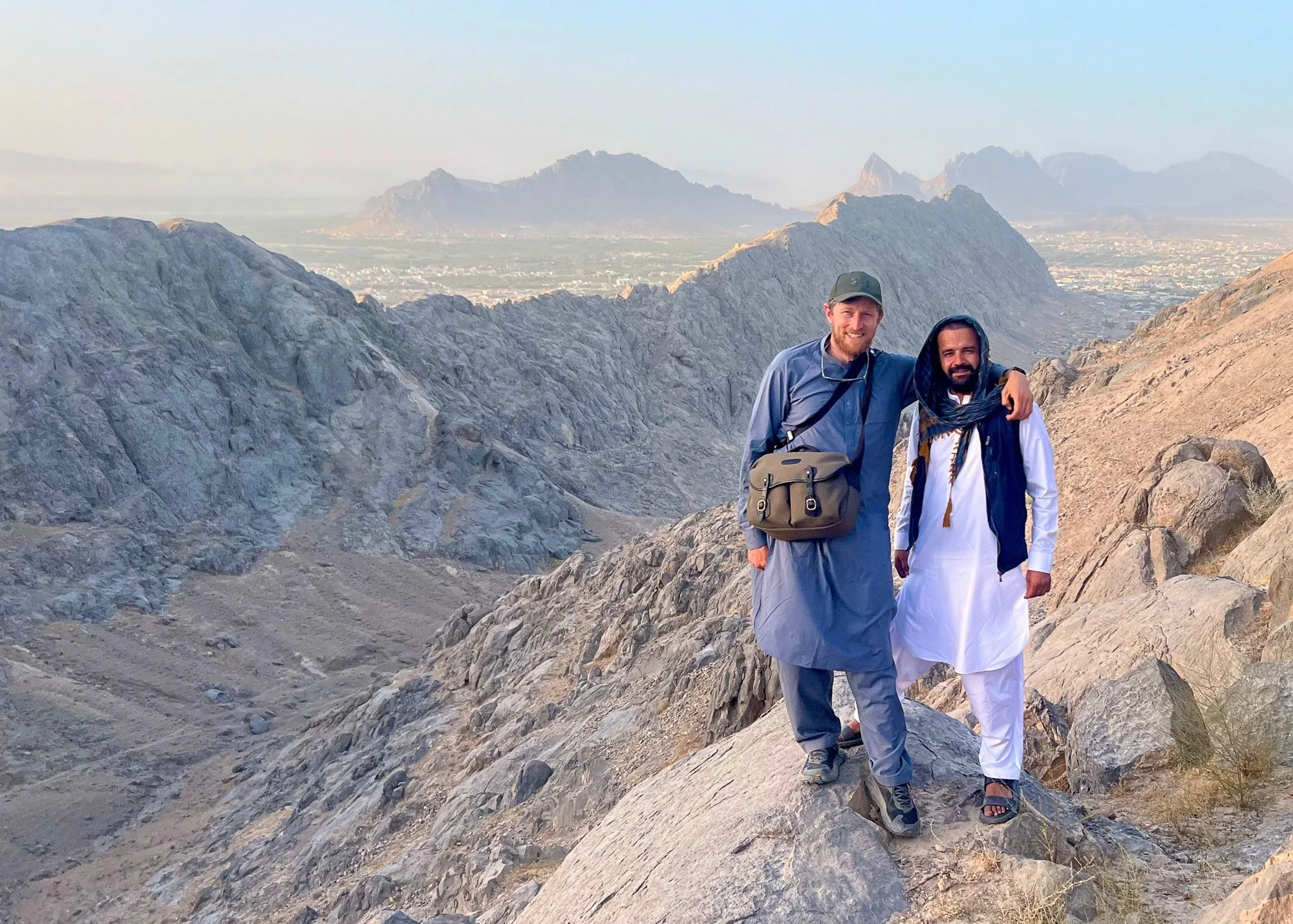
Joe Sheffer and Qudratullah Noory
Safarāt Travel is a collaboration between Joe Sheffer, an award-winning British journalist, and Qudratullah Noory, an Afghan native of Kabul who has worked and continues to work with dozens of international news agencies, television networks, and newspapers as a fixer, producer, and journalist.
Many people are surprised that Joe and Noory decided to promote Afghanistan as a destination for western tourists so soon after the Taliban regained control of the country in 2021. When Kabul initially fell from the internationally recognized government, Noory thought about fleeing. In desperation, he sold everything he had built over a decade — his business, office equipment, and cars — for less than $8,000. But when he realised he could not leave with his elderly mother and young family, he returned home and waited in fear for the Taliban to enter the city. Like so many others, he worried not just for his safety, but for his life.
Days later, a different kind of realisation struck him: his greatest problem was now economic. How would he survive? Like millions of others in Kabul, Noory saw the entire economy collapse overnight. The billions of dollars that had sustained daily life — through NGOs, contractors, and international projects had vanished. The global media focused on diplomats, NGO workers, and translators left behind, but few spoke of the cleaners, drivers, and street vendors whose livelihoods had depended indirectly on foreign presence. For them, too, everything stopped. The future looked bleak.
At the same time, Joe was watching the situation unfold, feeling a deep sense of guilt and responsibility. Having first lived in Kabul in 2012, he had spent years reporting from Afghanistan, often producing stories that now seemed naïve. Tales of progress and optimism that, in hindsight, failed to capture the country’s complexities. He realised that much of the international press, himself included, had been caught in a feedback loop, reporting what the foreign mission wanted to believe.
It didn’t take long for Joe and Noory to find common purpose. Together, they created a plan to give visitors a chance to see the country for what it truly is — raw, layered, and human. They invited small groups of western travellers to experience Afghanistan not as consumers of news but as participants in it — to witness the realities that cannot be captured in headlines or documentaries. That idea became Safarāt Travel.
Since their first trips in early 2022, Afghanistan’s tourism landscape has evolved dramatically. Neither Joe nor Noory expected the influx of vloggers, influencers, and adventure travellers who soon descended on the country. This wave of attention reshaped the way they operated and forced them to reflect on Safarāt’s role. Yet their mission remains unchanged: they are driven by people and story, not profit. While Noory and the growing team of drivers and guides now rely on Safarāt for their livelihoods, the company remains firmly committed to ethical, respectful, and sustainable travel.
Since February 2022, Safarāt has safely hosted hundreds of travellers across Afghanistan — through private expeditions, group journeys, and as the country’s leading destination management company for international tour operators. Their reputation for safety, cultural sensitivity, and storytelling continues to attract those seeking a deeper understanding of the country.
Looking ahead to the 2025–2026 season, Joe will be spending less time in Afghanistan as he turns his attention to new projects in the Middle East. However, he remains a frequent visitor and an integral part of the Safarāt story. The company has also returned to its journalistic roots — now able to obtain press and journalism visas in Afghanistan, Safarāt once again supports documentary makers, reporters, and filmmakers who wish to tell the country’s stories from the ground.